
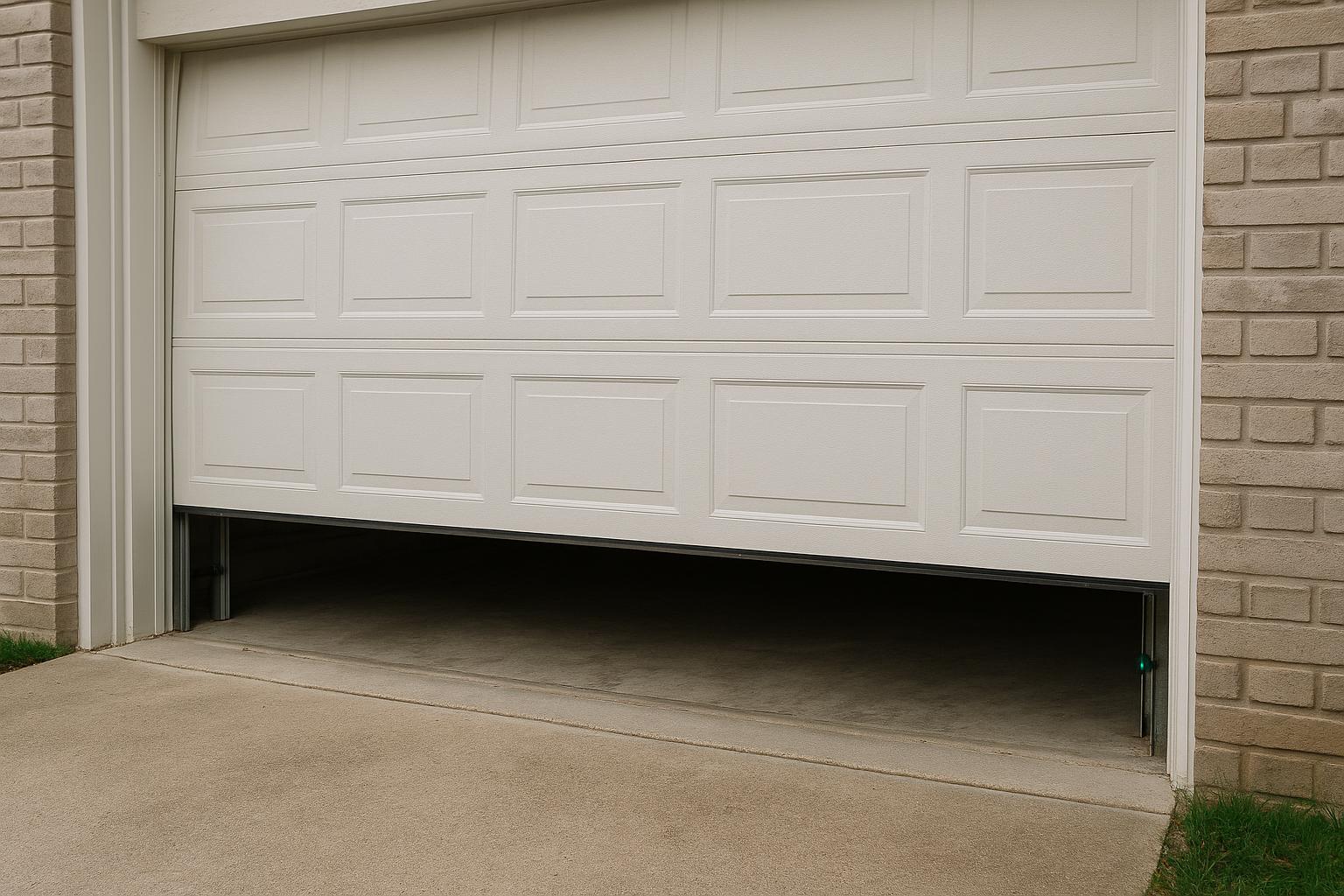
That Frustrating Moment When Your Garage Door Won't Stay Closed
You press the button on your garage door opener, watch the door glide downward, and then — just inches from the floor — it stops and reverses right back up. You try again. Same thing. Maybe you try holding the wall button down, and it works, but the moment you let go, the door creeps back up on its own.
This is one of the most common garage door complaints we hear from homeowners across Indianapolis, and the good news is that it's almost always fixable. The tricky part is figuring out which of several possible causes is behind the problem. Let's walk through the most likely culprits so you can understand what's happening and decide whether it's a quick DIY fix or something that needs professional attention.
Understanding Why Your Garage Door Reverses
Modern garage door openers are equipped with safety features that prevent the door from closing on people, pets, or objects. These safety mechanisms are required by federal law and have prevented countless injuries since they became mandatory in 1993. However, when these systems malfunction or fall out of adjustment, they can cause your door to reverse even when nothing is actually in the way.
Here are the most common reasons your garage door reverses before reaching the floor:
1. Misaligned Safety Sensors
This is the number one cause of garage doors reversing unexpectedly. Your garage door has two small sensors — called photo-eye sensors — mounted near the bottom of the door tracks on either side. One sends an infrared beam to the other. When something breaks that beam, the door reverses to avoid crushing whatever is in the way.
Over time, these sensors can get bumped, shifted by vibration, or knocked out of alignment by a stray basketball or bicycle. When they're misaligned, the opener thinks something is blocking the door even when the path is completely clear.
What to check:
- Look at both sensors. Most have a small LED light. If one is blinking or off entirely, it's likely misaligned or malfunctioning.
- Gently adjust the sensor that appears to be off until the light becomes steady.
- Clean the sensor lenses with a soft cloth — dust, cobwebs, and dirt can interfere with the beam.
- Make sure no objects are partially blocking the sensors.
2. Incorrect Close-Force or Travel-Limit Settings
Your garage door opener has adjustable settings that control how far the door travels and how much force it uses to close. If the close-limit setting is off, the opener may think the door has hit an obstruction when it's actually just reaching the floor. The opener interprets this as resistance and reverses the door as a safety precaution.
What to check:
- Locate the limit adjustment screws on your opener unit — they're usually labeled "up" and "down" or marked with arrows.
- Make small adjustments to the down-limit setting, testing the door after each change.
- Consult your opener's manual for specific instructions, as the process varies by brand and model.
If you're not comfortable making these adjustments yourself, this is a quick fix for any experienced garage door technician in Indianapolis.
3. Worn or Broken Springs
Your garage door springs do the heavy lifting — literally. They counterbalance the weight of the door so the opener doesn't have to work as hard. When springs wear out, lose tension, or break, the door becomes significantly heavier. The opener struggles to control the door's descent and may interpret the extra weight as an obstruction, triggering the auto-reverse.
Warning signs of spring problems:
- The door feels unusually heavy when you try to lift it manually.
- You hear loud creaking or grinding noises during operation.
- The door closes too quickly or slams down.
- You notice a gap in one of the springs above the door.
Important: Garage door springs are under extreme tension and can cause serious injury if handled incorrectly. Spring replacement should always be performed by a trained professional. This is not a DIY job, no matter how many YouTube videos make it look easy.
4. Damaged or Obstructed Tracks
The metal tracks that guide your garage door need to be clean, properly aligned, and free of dents or debris. If a track is bent, has accumulated grime, or has a small object lodged in it, the door can bind or stick as it travels downward. The opener senses this resistance and reverses.
What to check:
- Visually inspect both tracks for dents, bends, or gaps.
- Look for debris, leaves, or small objects that may have fallen into the tracks.
- Wipe the tracks clean with a damp cloth. Avoid using heavy lubricants on the tracks themselves — they can attract more dirt.
5. Worn Rollers or Hardware
The rollers that ride inside your tracks can wear out over time, especially the cheaper plastic ones that come standard on many doors. Worn rollers create friction and resistance, which can trigger the opener's safety reverse. Similarly, loose brackets, worn hinges, or fraying cables can all contribute to uneven door movement that confuses the opener.
If your door sounds noisy, jerky, or uneven as it moves, worn hardware could be the underlying issue. A professional maintenance visit can identify and replace these components before they cause bigger problems.
6. Wiring or Opener Malfunctions
Sometimes the issue isn't mechanical at all. Frayed wiring between the sensors and the opener, a failing logic board inside the opener unit, or even electrical interference can cause erratic behavior. Indianapolis homeowners with older openers — especially units that are 15 to 20 years old — may find that the electronics are simply reaching the end of their lifespan.
If you've checked the sensors, adjusted the limits, and inspected the tracks and springs without finding an obvious cause, the opener itself may need repair or replacement.
When to Call a Professional
Some of the fixes above — cleaning sensors, removing debris from tracks, and minor limit adjustments — are reasonable for a handy homeowner to tackle. But there are situations where calling a professional is the smarter and safer choice:
- You suspect a spring issue of any kind.
- The door is visibly off-track or sagging on one side.
- You've tried basic troubleshooting and the problem persists.
- Your opener is making unusual electrical sounds like buzzing or clicking without moving the door.
- You're unsure about any step in the process.
At Indianapolis Garage Door Service, we diagnose reversing issues every week for homeowners in Indianapolis, Lawrence, Greenfield, McCordsville, and the surrounding communities. In most cases, we can identify and fix the problem in a single visit.
Prevent Future Problems with Regular Maintenance
The best way to avoid unexpected garage door issues is with routine maintenance. An annual inspection and tune-up keeps your springs, rollers, sensors, and opener in top condition. During a maintenance visit, a technician will lubricate moving parts, test the safety systems, tighten hardware, and catch small problems before they turn into expensive repairs.
Think of it like an oil change for your garage door — a small investment that extends the life of the entire system and keeps everything running safely and smoothly.
Don't Ignore a Reversing Garage Door
A garage door that won't close isn't just an inconvenience — it's a security risk. An open garage is an invitation for theft, pests, and weather damage, especially during Indianapolis winters when freezing temperatures can wreak havoc on an exposed garage. If your door is reversing and you can't resolve it quickly, get it looked at sooner rather than later.
Need help with a garage door that won't stay closed? Contact Indianapolis Garage Door Service today. We'll get your door working properly so you can stop pressing that button and hoping for the best.