
Your Garage Door Springs Are Working Harder Than You Think
Every time you open and close your garage door, the springs do the heavy lifting — literally. A standard garage door can weigh anywhere from 130 to 350 pounds or more, and the springs are responsible for counterbalancing all of that weight. Without functioning springs, your garage door opener can't lift the door on its own, and you certainly can't do it by hand.
Most homeowners in Indianapolis use their garage door multiple times a day without giving the springs a second thought. But like any mechanical component under constant stress, garage door springs have a limited lifespan. When they fail, it's usually sudden and inconvenient — and sometimes dangerous. The good news is that springs almost always give warning signs before they break completely.
Here's what to watch for so you can schedule a replacement before you're stuck with a door that won't budge.
Understanding the Two Types of Garage Door Springs
Before diving into the warning signs, it helps to know which type of springs your garage door uses:
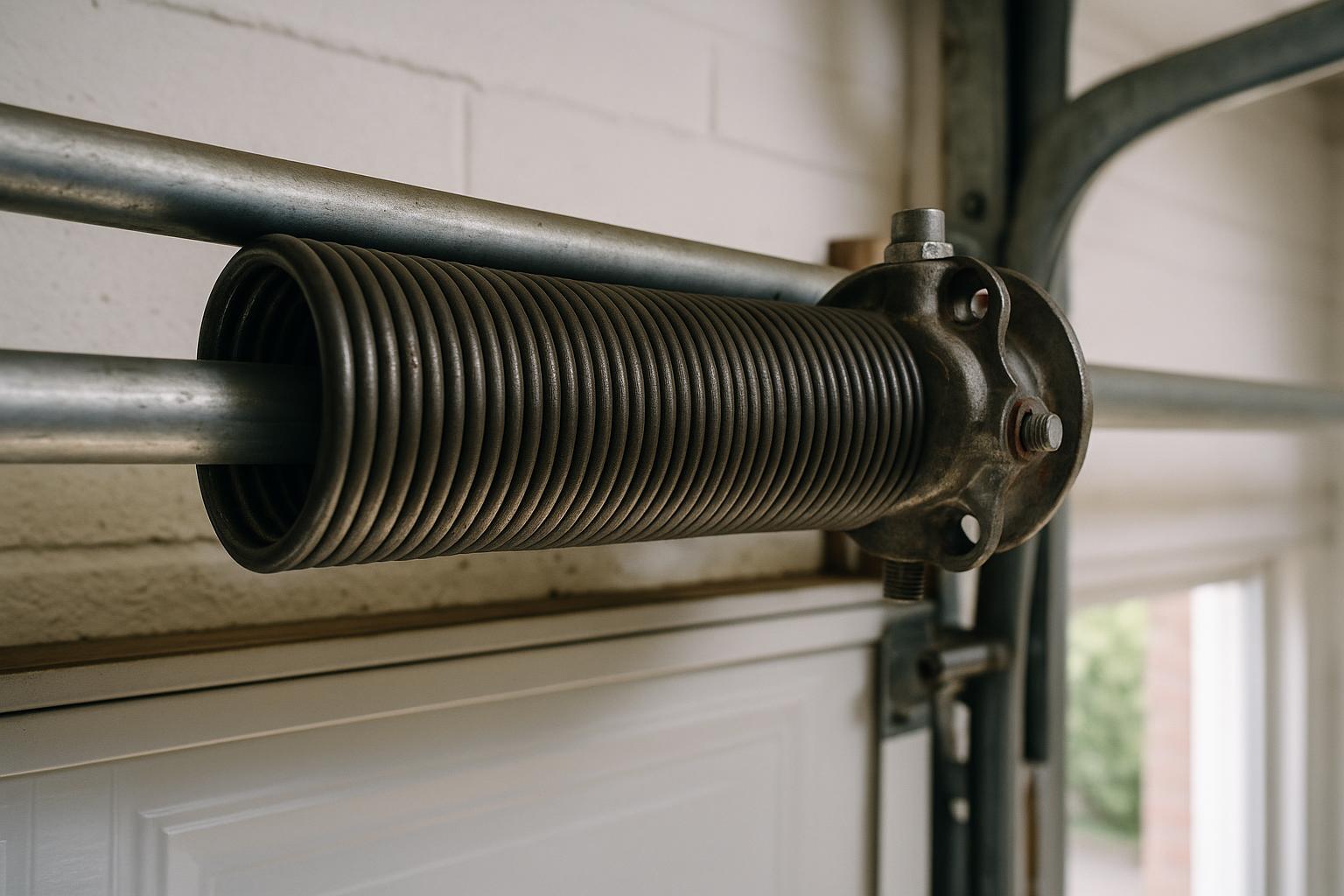
- Torsion springs are mounted on a metal shaft above the door opening. They twist to store energy and are the most common type found on residential garage doors in the Indianapolis area.
- Extension springs run along the horizontal tracks on either side of the door. They stretch and contract to lift and lower the door.
Both types wear out over time, and both can be dangerous when they break due to the enormous amount of tension they hold. Regardless of which type your door uses, the warning signs are similar.
7 Warning Signs Your Garage Door Springs Are Failing
1. The Door Feels Heavier Than Usual
Try this simple test: disconnect your garage door opener by pulling the emergency release cord, then lift the door manually about halfway. A door with healthy springs should feel relatively light and stay in place when you let go. If the door feels extremely heavy or slides back down immediately, your springs are losing tension and nearing the end of their life.
2. The Door Opens Unevenly or Crooked
If your garage door tilts to one side as it opens or closes, one of your springs may be weaker than the other. This is especially common with extension spring systems that have a spring on each side. An uneven door puts extra strain on the opener, the tracks, and the remaining good spring — which can lead to a cascade of problems if you don't address it quickly.
3. You Hear Loud Squeaking or Popping Sounds
Some noise during operation is normal, but new or worsening squeaking, grinding, or popping sounds can indicate that your springs are struggling. Worn-out coils create friction and resistance that produce these sounds. If lubricating the springs doesn't resolve the noise, it's time to have them inspected by a professional.
4. There Are Visible Gaps in the Spring Coils
Take a look at your torsion spring above the door. A healthy spring has tightly wound coils with no visible gaps. If you notice a gap or separation in the coils — even a small one — the spring has likely already partially failed. This is one of the clearest visual indicators that a full break is imminent.
5. The Door Slams Shut Instead of Closing Smoothly
When springs lose their ability to control the door's weight, the door may drop quickly during closing rather than lowering at a controlled speed. This is a safety hazard, especially for families with children or pets. If your door is closing faster than it used to, don't ignore it.
6. Your Opener Is Straining or Stopping Mid-Cycle
Your garage door opener is designed to work with the springs, not to replace them. When springs weaken, the opener has to compensate by working harder. You might notice the motor running louder, the door stalling partway up, or the opener shutting off before the door is fully open. Continuing to run your opener under these conditions can burn out the motor, turning a spring replacement into a much more expensive repair.
7. The Springs Are More Than 7-10 Years Old
Most standard garage door springs are rated for approximately 10,000 cycles — one cycle being a single open-and-close. For a household that uses the garage door four times a day, that works out to roughly seven years. If your springs are approaching or past that age, they're living on borrowed time, even if you haven't noticed any obvious symptoms yet.
Why You Should Never Replace Garage Door Springs Yourself
We understand the DIY impulse — plenty of Indianapolis homeowners are handy and enjoy tackling projects around the house. But garage door spring replacement is one job that should always be left to trained professionals. Here's why:
- Extreme tension: Torsion springs are wound under tremendous force. A spring that releases unexpectedly can cause serious injury or even death.
- Specialized tools required: Proper spring replacement requires winding bars, clamps, and other tools that most homeowners don't have.
- Precise calibration: Springs must be matched to the exact weight and size of your door. An incorrectly sized or improperly wound spring will cause operational problems and can damage your entire system.
Professional technicians handle spring replacements every day and have the training, tools, and experience to do the job safely and correctly.
How Often Should You Have Your Springs Inspected?
We recommend having your garage door system professionally inspected at least once a year. During a maintenance visit, a technician will check the condition of your springs, cables, rollers, and other hardware — catching small issues before they become big problems. Many of our customers in Indianapolis, Lawrence, Greenfield, and the surrounding communities schedule annual tune-ups in the spring or fall to keep their doors running reliably through every season.
What to Do If a Spring Breaks
If you hear a loud bang from your garage — like a firecracker going off — and your door won't open afterward, a spring has almost certainly snapped. Here's what to do:
- Don't try to open the door using the opener or by hand. Operating a door with a broken spring can damage the opener and is physically dangerous.
- Keep the area clear of children and pets until the spring is replaced.
- Call a professional for repair. Most reputable garage door companies, including ours, can handle spring replacements quickly — often the same day.
Don't Wait Until You're Stranded
A broken garage door spring always seems to happen at the worst possible time — when you're running late for work or trying to get the car out during a storm. By paying attention to the warning signs and scheduling proactive maintenance, you can avoid the inconvenience and safety risks of a sudden failure.
If you've noticed any of the symptoms described above, or if it's been a while since your springs were inspected, Indianapolis Garage Door Service is here to help. We serve homeowners throughout Indianapolis, McCordsville, Fortville, Cumberland, and the surrounding areas with fast, honest garage door repair and maintenance. Give us a call to schedule an inspection and keep your garage door operating safely and smoothly.