
Your Garage Door Shouldn't Sound Like That
You press the button, and instead of a smooth, quiet operation, your garage door greets you with a symphony of grinding, squealing, popping, or rattling. If you're like most Indianapolis homeowners, you've probably learned to tune it out. But those noises aren't just annoying — they're your garage door's way of telling you something is wrong.
Ignoring unusual garage door sounds can lead to bigger, more expensive problems down the road. The good news is that most noisy garage door issues are fixable, especially when you catch them early. Let's break down what different sounds mean and what you should do about them.
Grinding or Scraping Sounds
A grinding or scraping noise is one of the most common complaints we hear from homeowners across Indianapolis and the surrounding areas. This sound typically points to one of a few issues:
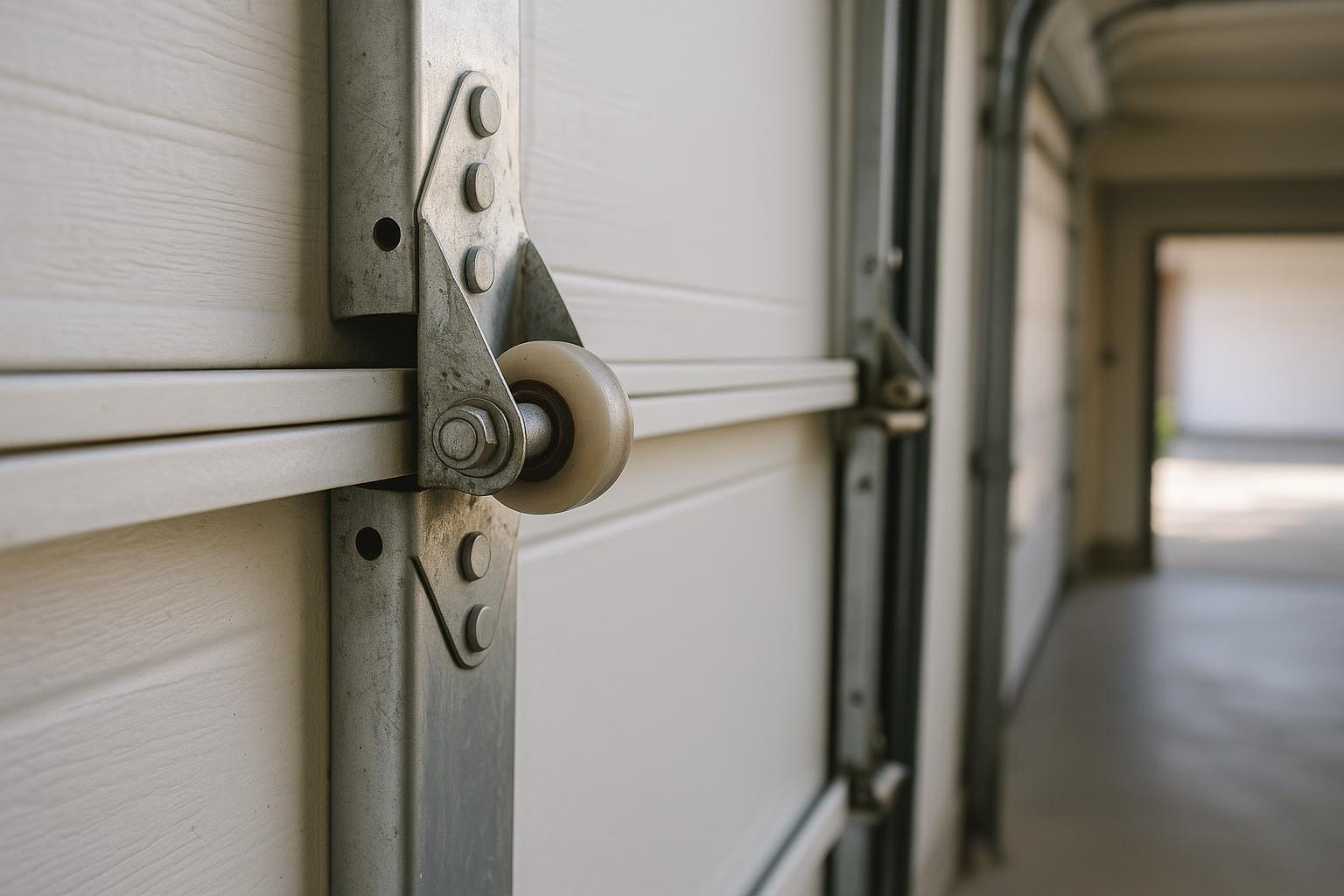
- Worn rollers: Metal rollers wear down over time and can start grinding against the track. Nylon rollers are a quieter, longer-lasting alternative that we frequently recommend.
- Misaligned tracks: If the tracks that guide your garage door have shifted even slightly, the door can scrape against them as it moves. This puts stress on the entire system and can cause premature wear on other components.
- Lack of lubrication: Moving metal parts need regular lubrication to operate smoothly. Without it, friction builds up and creates that harsh grinding sound.
If you hear grinding, it's worth having the door inspected before the problem escalates. A simple roller replacement or track adjustment can save you from a much costlier repair later.
Squealing or Screeching
A high-pitched squeal every time your garage door opens or closes is hard to ignore — and your neighbors in Lawrence, Cumberland, or McCordsville probably aren't thrilled about it either. Common causes include:
- Dry or rusty hinges and bearings: These components need periodic lubrication with a garage door-specific lubricant (not WD-40, which is a solvent, not a long-term lubricant).
- Worn torsion spring coils: As torsion springs age, they can produce a squealing sound during operation. This is especially common during Indianapolis's colder months when metal contracts.
- Belt or chain tension issues: If your opener uses a chain drive, an improperly tensioned chain can create squealing or slapping sounds.
A quick maintenance visit can usually eliminate squealing entirely. Regular lubrication is one of the simplest and most effective things you can do to keep your garage door quiet and functional.
Rattling or Vibrating
Rattling sounds often indicate loose hardware. Your garage door moves up and down hundreds of times a year, and all that vibration can gradually loosen nuts, bolts, screws, and brackets throughout the system.
Here's what to check:
- Loose track brackets: The brackets that hold the tracks to the wall and ceiling can work themselves loose over time.
- Worn opener mounting: If the garage door opener itself is vibrating excessively, the mounting hardware may need tightening, or the opener may be reaching the end of its lifespan.
- Loose chain or drive components: A rattling chain on a chain-drive opener is a common culprit and usually just needs a tension adjustment.
While tightening loose hardware is something handy homeowners can sometimes handle, be cautious around spring components and cables. These are under extreme tension and should only be serviced by a trained technician.
Popping or Banging
A loud pop or bang during operation is harder to ignore — and for good reason. This sound often signals a more serious issue:
- Torsion spring problems: A popping sound can indicate that a spring is struggling under load or that a coil has shifted. In the worst case, a loud bang from the garage could mean a spring has already broken.
- Panel or section issues: If a garage door panel is warped, cracked, or coming loose from its hinges, it can produce a banging noise as the door moves through the damaged section.
- Opener gear failure: Stripped gears inside the opener unit can create a popping or clicking noise, especially when the motor is running but the door isn't moving properly.
If you hear a sudden loud bang, especially when the door isn't in use, do not attempt to operate the door. A broken spring can make the door extremely heavy and dangerous to move manually. Call a professional right away.
Humming Without Movement
If your garage door opener hums or buzzes but the door doesn't move, the motor is running but something is preventing the door from responding. This could mean:
- A stripped gear inside the opener: The motor is spinning, but the gear that transfers power to the drive mechanism has worn out.
- A broken spring: Without functioning springs to counterbalance the door's weight, the opener motor simply can't lift it.
- The disconnect switch is engaged: Sometimes the manual release cord gets pulled accidentally, disconnecting the opener from the door.
Continuing to press the button when the opener is humming but not moving can burn out the motor. If a quick check of the disconnect switch doesn't solve the problem, it's time to call in a technician.
When to DIY and When to Call a Pro
Some garage door noise issues have simple fixes that homeowners can handle safely:
- Apply lubricant to rollers, hinges, springs, and bearing plates using a silicone-based or lithium-based garage door lubricant.
- Tighten visible hardware like track bolts and hinge screws using a socket wrench.
- Check the opener chain or belt for proper tension according to your owner's manual.
However, any work involving springs, cables, or the bottom brackets of the door should be left to professionals. These components are under significant tension and can cause serious injury if handled incorrectly.
Keep Your Garage Door Running Quietly in Indianapolis
Your garage door is one of the largest moving parts of your home, and it deserves regular attention. Most of the noises we've covered are preventable with routine maintenance — something many Indianapolis homeowners overlook until a small issue becomes a major repair.
At Indianapolis Garage Door Service, we offer comprehensive maintenance visits that include lubrication, hardware inspection, balance testing, and safety checks. Whether you're in Greenfield, Fortville, or anywhere across the Indianapolis metro area, we can help you keep your garage door operating smoothly and quietly all year long.
If your garage door is making a sound that doesn't seem right, don't wait for it to get worse. Contact us today to schedule an inspection. We'll diagnose the problem, explain your options, and get your door back to running the way it should — quietly.